Edwin Romanzo Elmer - Mourning Picture (1890)
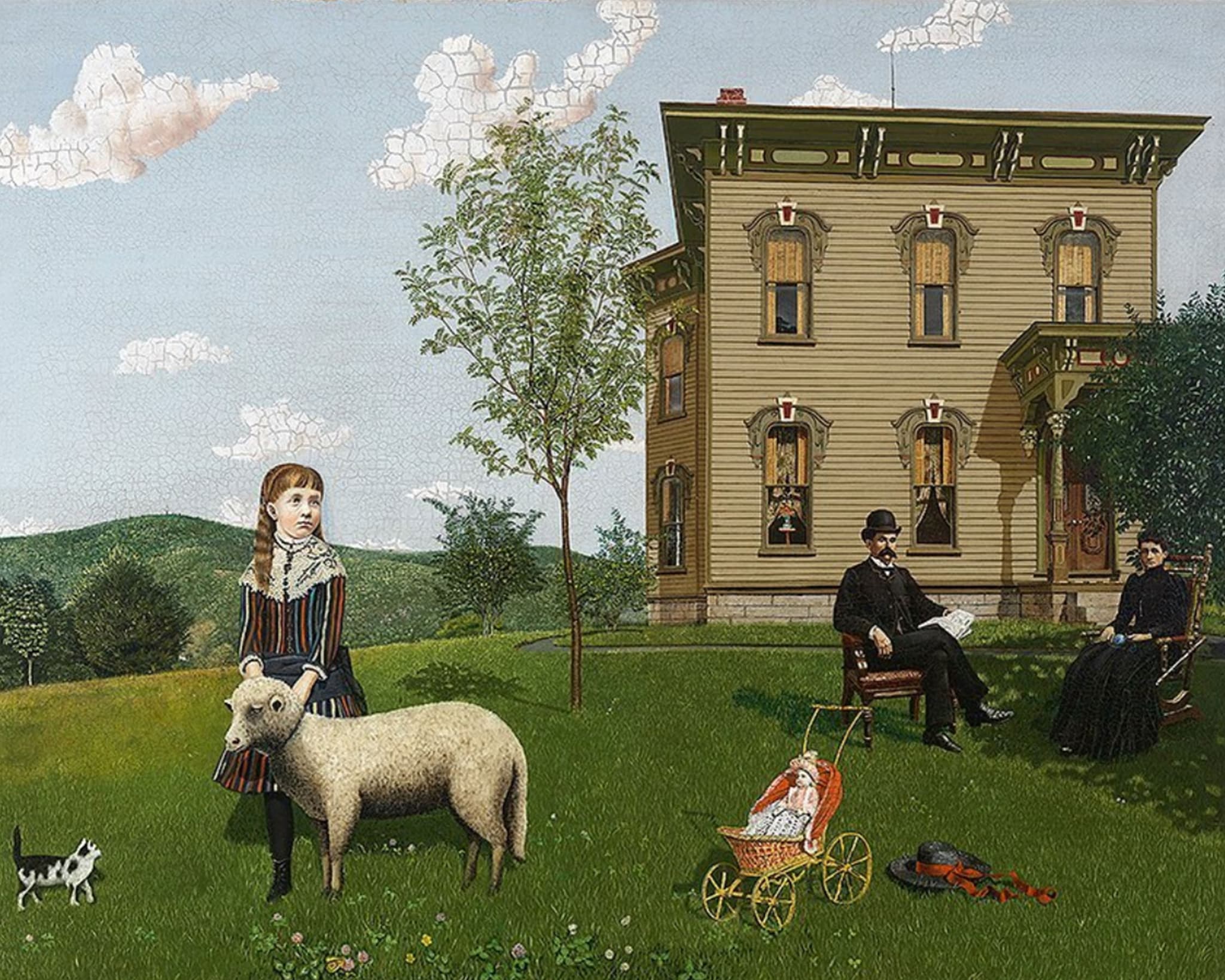
- Title: Mourning Picture
- Artist: Edwin Romanzo Elmer (1850–1923)
- Date: 1890
- Medium: Oil on canvas
- Dimensions:
- Location: Smith College Museum of Art, Northampton, Massachusetts, USA
- Photo credit: Smith College Museum of Art
Mourning Picture is a deeply moving and intricately detailed painting by Edwin Romanzo Elmer (1850–1923). The work portrays the artist, his wife Mary, and their late daughter Effie, who died of appendicitis at the age of nine. The painting is set in front of the family home in Buckland, Massachusetts, with the artist and his wife dressed in mourning attire. Effie, the deceased daughter, is depicted standing between her parents, bathed in sunlight, creating a stark contrast with the shadowed figures of her grieving parents.
The composition is notable for its realism and emotional intensity, with Elmer using fine brushwork and attention to detail to capture the textures of clothing, the landscape, and the expressions of sorrow. The style reflects elements of American realism, with a focus on everyday life and personal narrative.
Edwin Romanzo Elmer was an American painter known for his portraits, genre scenes, and still lifes. He spent most of his life in Ashfield, Massachusetts, and was also an inventor
The painting is remarkable for its unusual composition, which includes both the living and the deceased in a single frame—a rare approach in 19th-century American art. "Mourning Picture" has inspired notable works, including a poem by Adrienne Rich, who wrote from the perspective of Effie, the deceased daughter. Also, the book "Big Mouth & Ugly Girl" by Joyce Carol Oates, 2003, mentions the work of art.
The Smith College Museum of Art website quotes an exerpt of Adrienne Rich's poem “Mourning Picture” which she wrote from Effie’s perspective : “This was our world. / I could remake each shaft of grass / feeling its rasp on my fingers, / draw out the map of every lilac leaf / or the net of veins on my father's / grief-tranced hand.”