Bo Bartlett - The Bride’s Maid (2002)
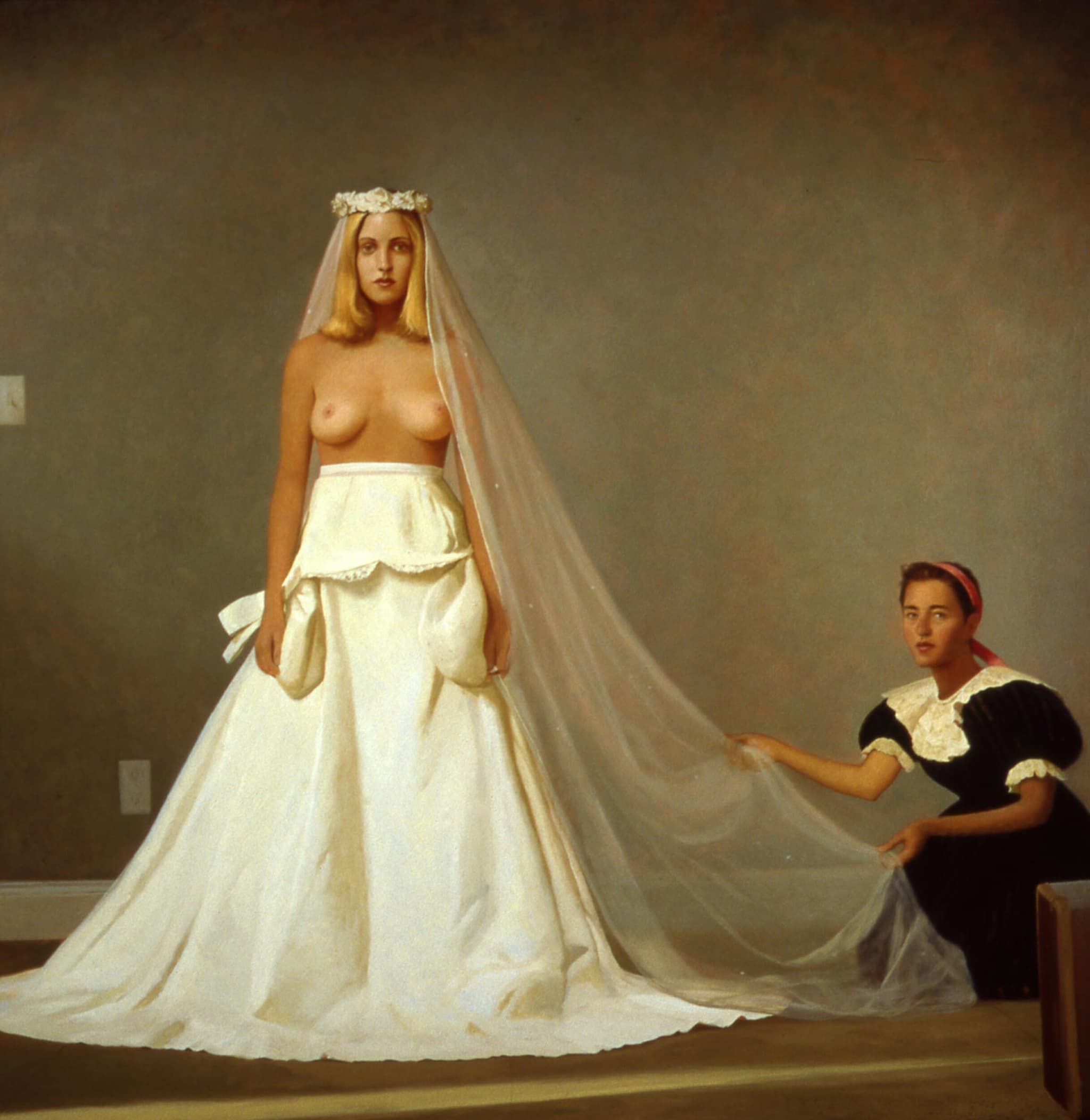
- Title: The Bride’s Maid
- Artist: Bo Bartlett (1955-)
- Date: 2002
- Medium: Oil on linen
- Dimensions: 81 x 84 cm
- Location: Unknown
- Photo credit: Bo Bartlett on bobartlett.com
- Copyright: Bo Bartlett
Bo Bartlett’s "The Bride’s Maid" presents a moment that feels suspended in time as a bride is getting dressed for her wedding ceremony with the help of a maid. It is an intimate, transitional moment as the bride is being dressed, her body naked from the hips up, her breasts exposed.
Rather than presenting the bride as an idealized symbol of purity or celebration, Bartlett shows her as a real, physical person, vulnerable and grounded in her own body. The act of dressing becomes the central event, emphasizing preparation rather than performance, and drawing the viewer into a moment that is usually unseen.
The exposure of the bride’s body is not eroticized; instead, it conveys vulnerability and humanity. Bartlett’s careful, realist rendering of flesh, fabric, and light lends the figure a sense of weight and presence, reinforcing the honesty of the scene. The bride’s nudity underscores the idea of transition—she exists between states, neither fully private nor fully public, neither simply an individual nor yet transformed into the ceremonial figure of “the bride.” This liminal quality is essential to the painting’s emotional impact. The viewer witnesses a moment of transformation that is physical, psychological, and symbolic.
The emotional tone of the painting is subdued and contemplative. The bride’s expression and posture suggest inward focus rather than excitement. This introspection complicates the cultural narrative of marriage as purely joyful or triumphant. Bartlett invites the viewer to consider the bride’s inner life: anticipation, uncertainty, acceptance, or even quiet resignation.
The presence of the maid further emphasizes intimacy and trust. The act of being dressed by another person suggests dependence and connection, reinforcing themes of relational bonds and the surrender of autonomy that can accompany major life transitions. Other paintings can be associated with this dual presence: mistress and maid, particularly Manet's Olympia.
The painting’s meaning extends beyond the specific event of a wedding. Bartlett uses the ritual of marriage as a framework to explore broader ideas about identity, embodiment, and change. Clothing becomes a metaphor for social roles, expectations, and narratives imposed from the outside. The bride’s nakedness, in contrast, represents the self stripped of symbolism and ceremony. The moment captures the tension between who we are privately and who we are required to become publicly.
Bartlett transforms an ordinary, even awkward moment into a psychologically rich image that resists sentimentality. By focusing on vulnerability rather than spectacle, Bartlett challenges traditional representations of women, weddings, and femininity in art. The painting asserts that moments of preparation and exposure—both literal and emotional—are as significant as the events they precede. In doing so, "The Bride’s Maid" becomes a meditation on the quiet gravity of change and the deeply human experience of crossing from one state of being into another.
--
- On Bo Bartlett's website: Bo Bartlett: The Bride’s Maid