Domenico Ghirlandaio - Birth of Mary (1485)
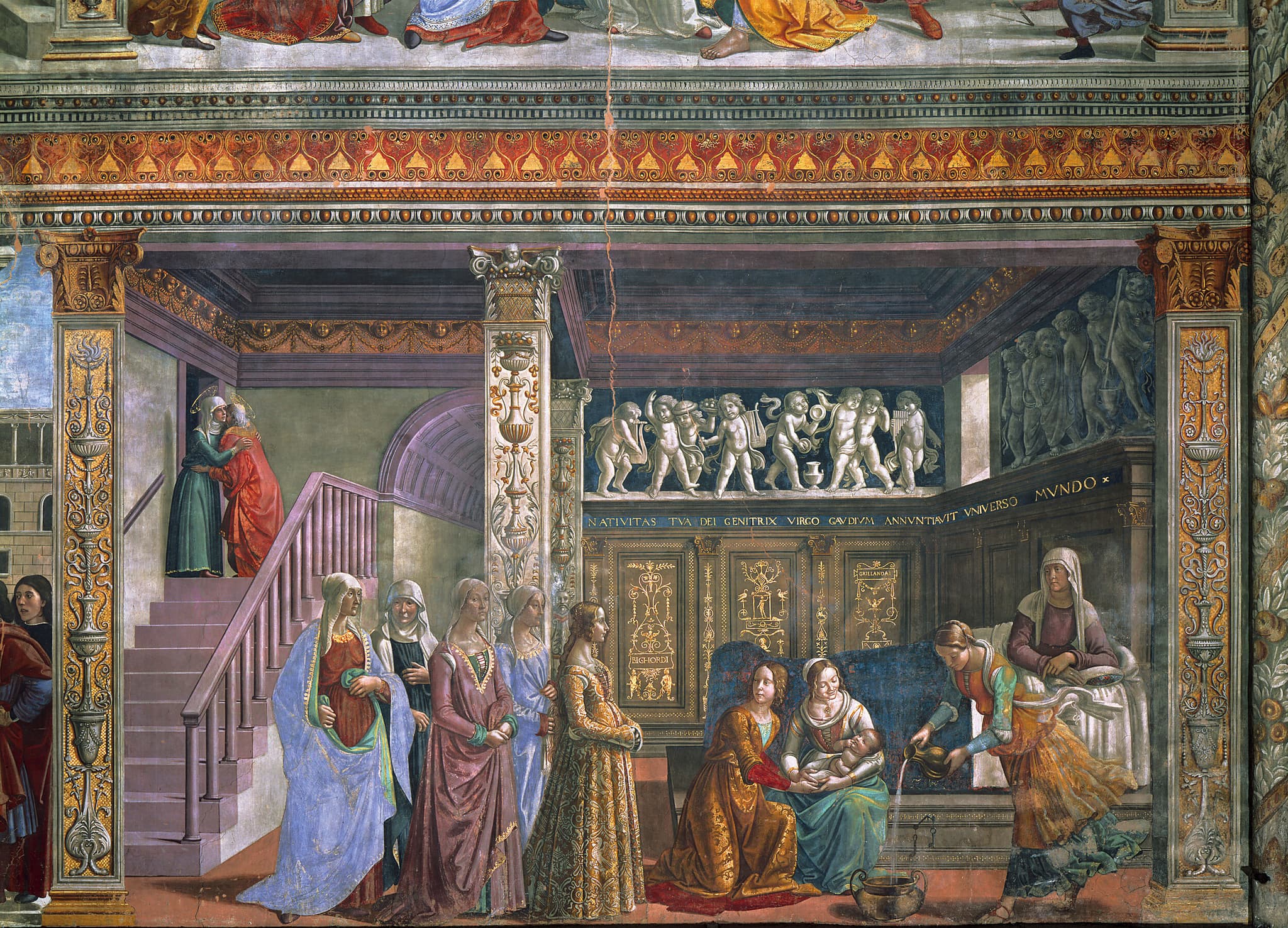
- Title: Birth of Mary
- Artist: Domenico Ghirlandaio (1448-1494)
- Date: 1485
- Made in: Cappella Tornabuoni, Santa Maria Novella, Florence, Italy
- Medium: Fresco
- Dimensions: 230 x 450 cm
- Location: Cappella Tornabuoni, Santa Maria Novella, Florence, Italy
- Photo credit: meisterdrucke.lu
Domenico Ghirlandaio’s "Birth of Mary" is a large fresco in the Tornabuoni Chapel of Santa Maria Novella in Florence, painted around 1485–1490. It shows the moment after Anne has given birth to Mary, set not in biblical Palestine but in what looks like an elegant late-15th-century Florentine bedroom. Anne, the mother of Mary, reclines in a grand wooden bed, propped up against rich blue textiles, while attendants bustle around her, emphasizing that this is a household of wealth and status. The room is paneled in illusionistically carved wood, and above the panels runs a frieze of lively putti (cherubs), creating a luxurious and festive setting for the sacred event.
In the foreground, the newborn Mary is the focus of quiet, practical care. A midwife cradles the baby, another pours water from an elegant jug into a basin for her first bath, and two women sit at the bedside, one of them reaching out to touch or receive the child. The scene is intimate and domestic, yet highly staged: each figure wears sumptuous contemporary dress with elaborate fabrics and jewelry, and their calm, dignified poses turn a private moment into something like a courtly ceremony. The combination of everyday actions—bathing, nursing, visiting—and the solemn, almost theatrical arrangement of the figures is typical of Ghirlandaio’s narrative style.
One of the most striking aspects of the fresco is the way it doubles as a portrait of the Tornabuoni family’s female world. Prominent Florentine ladies, including the elegant Giovanna Tornabuoni, process into the room on the left, serving as “visiting” relatives and friends who come to honor the birth. In reality, these are contemporary portraits inserted into the sacred story, tying the family’s own lineage and hopes for continuity to the Virgin’s miraculous birth. This blending of sacred narrative and social self-display would have been immediately legible to viewers in Renaissance Florence, where such chapel commissions functioned as both acts of piety and public statements of status.
Architecturally, the room reads like a carefully constructed stage set, with its coffered ceiling, richly carved pilasters, and receding panels that hint at depth without distracting from the figures. Beyond the immediate drama lies a subtle play between past and present: antique-looking ornaments and Latin inscriptions coexist with very current Florentine fashions and manners. The result is a scene that feels simultaneously historical and contemporary, devotional and worldly. In "Birth of Mary", Ghirlandaio turns a key episode from the life of the Virgin into a vivid panorama of Renaissance domestic life, using everyday detail to bring a sacred story into the viewer’s own time and city.
--