Masaccio - Expulsion from the Garden of Eden (1424)
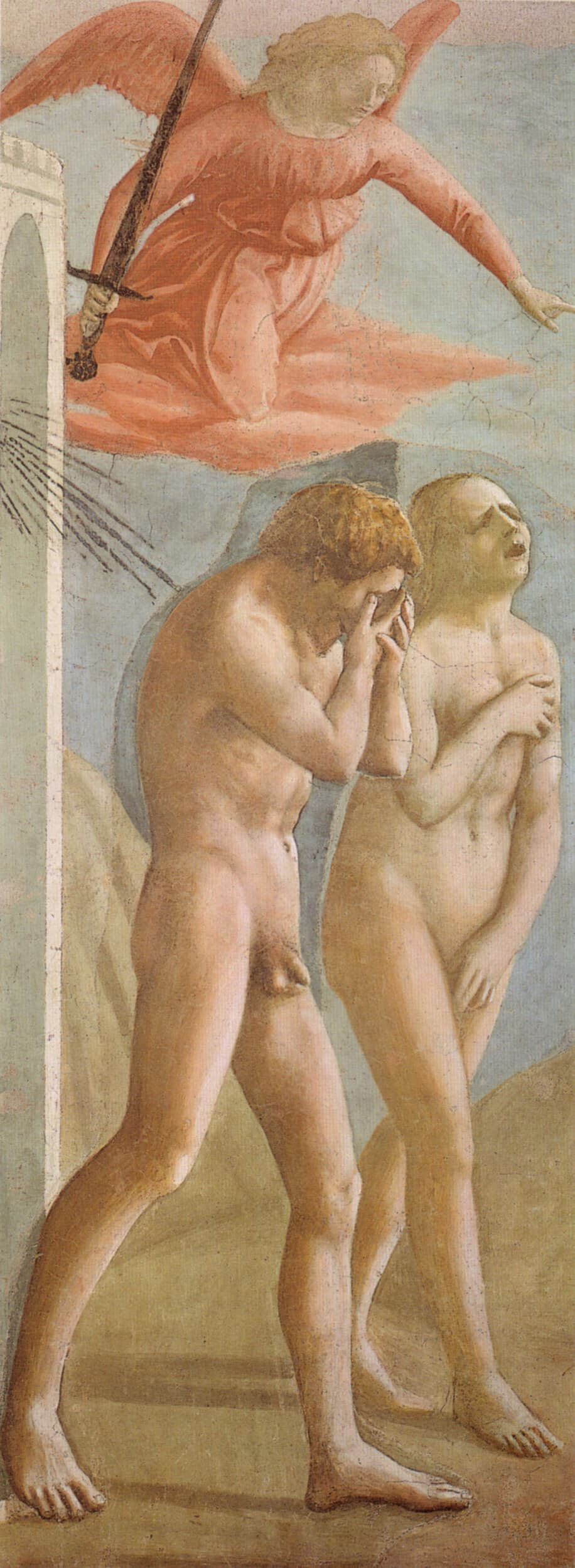
- Title: Expulsion from the Garden of Eden (Cacciata di Adamo e Eva)
- Artist: Masaccio (1401-1428)
- Date: 1424
- Medium: Fresco
- Dimensions: 208 x 88 cm
- Location: Brancacci Chapel, Church of Santa Maria del Carmine, Florence, Italy
- Photo credit: Meidosensei on Wikimedia in 2022
Masaccio’s fresco, “The expulsion from the garden of Eden”, is seen as a landmark in the beginning of the Renaissance with usage of linear perspective, with full and muscular bodies, with nudity, with characters showing emotions and unique features, with usage of light and shade. Also, Masaccio represents Eve in deeply felt pain exploring the meaning of the expulsion on a more personal level. Masaccio influenced greatly Domenico Ghirlandaio, who was Michelangelo’s teacher.
This fresco depicts Adam and Eve’s banishment from paradise after succumbing to temptation. The artwork captures the emotional weight of their expulsion, showcasing a transition from innocence to the burdens of human existence. It is part of the larger fresco cycle in the Brancacci Chapel in Florence, which has influenced countless artists.
Masaccio employs innovative techniques that revolutionized the world of painting. He uses chiaroscuro, the contrast of light and shadow, to create a three-dimensional effect that adds depth and realism to the figures. The positioning of Adam and Eve is particularly striking; they are placed at the forefront, almost emerging from the painting’s surface, inviting viewers to witness their despair. This approach foreshadows the high Renaissance focus on human emotion and anatomy.
The expressions and gestures of Adam and Eve evoke a raw sense of vulnerability and regret. Adam looks back with sorrow and confusion, while Eve covers herself in shame. Their bodily forms are rendered with anatomical precision, enhancing the realism of their plight. Masaccio’s ability to convey such profound emotional depth prompts viewers to empathize with the characters, drawing them into the narrative.
Masaccio’s fresco is part of an ensemble which includes many frescos throughout the Brancacci Chapel, including Masolino’s “Temptation of Adam and Eve”
--
- On Wikipedia: Masaccio - Expulsion from the Garden of Eden
- On Google Arts & Culture: Masaccio - Expulsion from the Garden of Eden
- On Wikipedia: Brancacci Chapel with beautiful frescoes