Paul Gauguin - The Breton Shepherdess (1886)
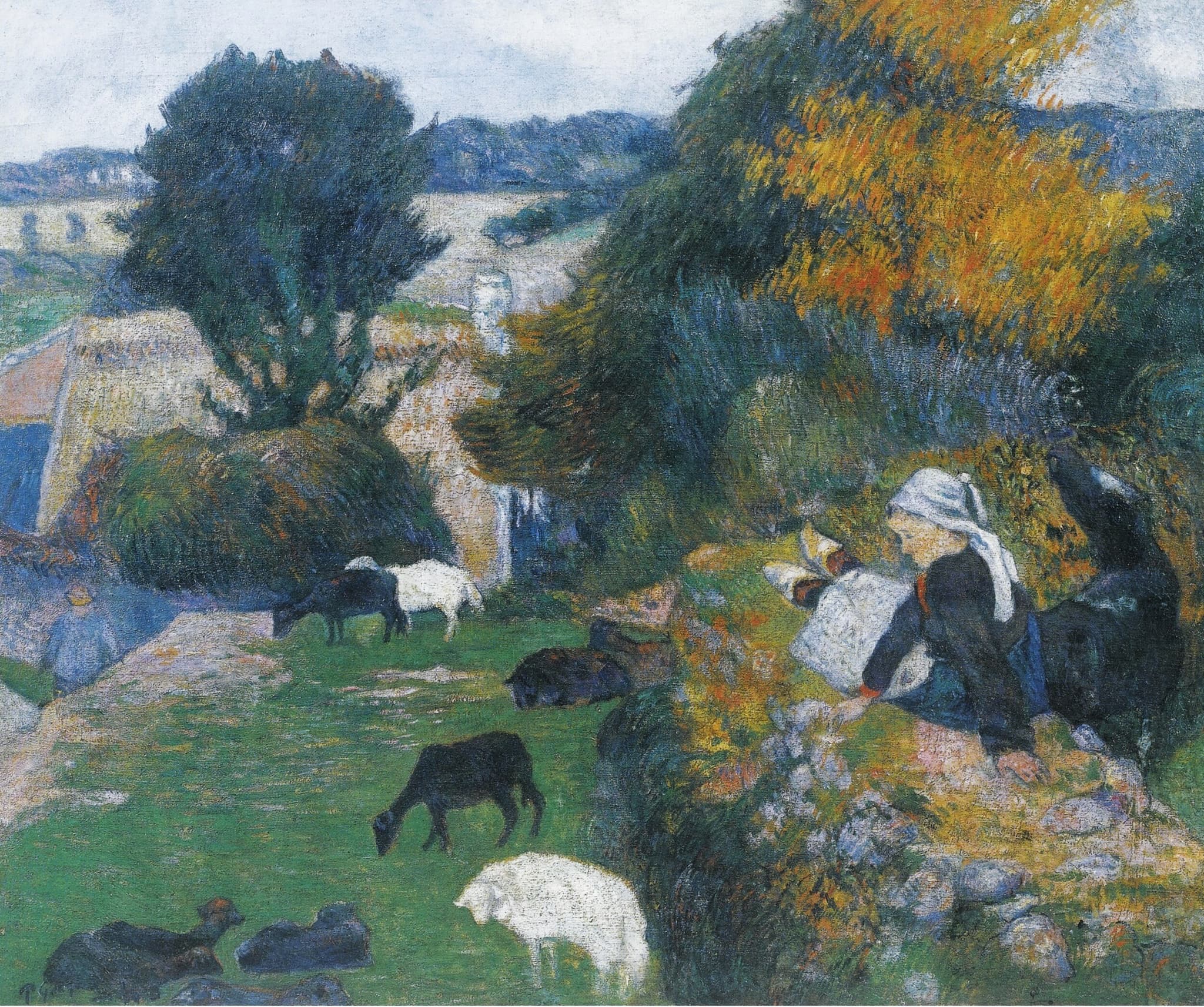
- Title: The Breton Shepherdess (La bergère bretonne)
- Artist: Paul Gauguin (1848-1903)
- Date: 1886
- Made in: Pont-Aven, Brittany, France
- Medium: Oil on canvas
- Dimensions: 60 x 73 cm
- Location: Laing Art Gallery, Newcastle-upon-Tyne, England
"The Breton Shepherdess" portrays a young shepherdess in a rural landscape, embodying the simplicity and rustic charm of Breton life. Gauguin's depiction of the shepherdess is characterized by bold outlines, simplified forms, and a muted color palette, which reflect his transition from Impressionism to a more personal and symbolic style.
The painting captures the traditional attire and serene demeanor of the shepherdess, set against the backdrop of Brittany's rolling hills and lush greenery. Gauguin's focus on rural life and local customs highlights his interest in the region's culture and his desire to move away from the urban and industrial influences of Paris.
Gauguin's works from this period, including "The Breton Shepherdess", reflect his increasing disillusionement with the urban and industrialized world and his growing interest in primitive art, symbolism, and the exploration of non-Western cultures. His art often blends realism with a dreamlike quality, creating a unique visual language that bridges tradition and modernity.
"The Breton Shepherdess" is an important example of Gauguin's early exploration of rural and traditional themes, which would later influence his more famous works from Tahiti. The painting's depiction of Breton life has contributed to the broader understanding of Gauguin's artistic evolution and his role in the development of modern art.
--