Simone Martini - Annunciation (1333)
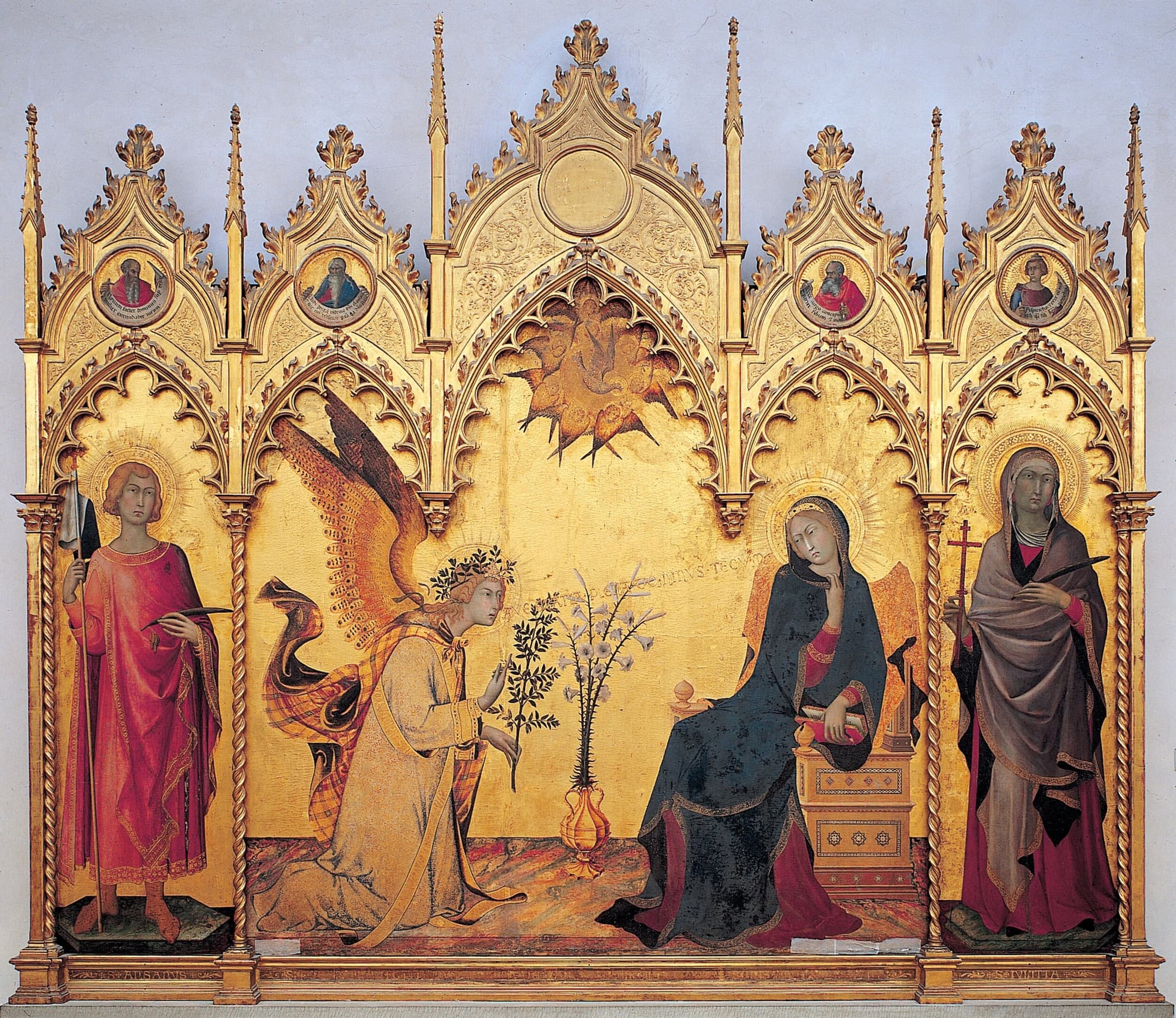
- Title: Annunciation (Annunciazione tra i santi Ansano e Margherita)
- Artist: Simone Martini (c.1284-1344)
- Date: 1333
- Medium: Tempera and gold on wood triptych
- Dimensions: 265 cm x 305 cm
- Location: Gallerie degli Uffizi, Florence, Italy
Simone Martini’s "Annunciation with Saint Margaret and Saint Ansanus" is a gilded painting for the altar of St. Ansanus in Siena Cathedral, a church and city devoted to the Virgin Mary. In the central panel, the Archangel Gabriel is greeting Mary with the words “Ave gratia plena, Dominus tecum” (Hail, you are full of grace, the Lord is with you), painted as if in the air between them. Mary, seated on an ornate throne, recoils slightly and gathers her cloak around her, a rare depiction of genuine fear and hesitation in medieval Annunciation scenes.
The setting is almost immaterial, a shallow marble floor before a wall of shimmering gold that evokes heavenly light rather than real space. A vase of lilies stands between Gabriel and Mary, symbolizing both her purity and Christ to come, while the dove of the Holy Spirit descends above, aligned precisely with the lilies to emphasize the incarnation. The figures are elongated, elegant, and richly robed, exemplifying the courtly International Gothic style that Simone helped define, with its love of refined line, delicate pattern, and luxurious fabrics.
The painting’s meaning lies in its portrayal of the Annunciation as both cosmic and intimate: the moment when God becomes flesh is staged as a tense, almost whispered encounter, where Mary’s inner turmoil is as visible as Gabriel’s reverent urgency. This psychological nuance was innovative in 14th-century altarpieces, which more often favored static, iconic figures.
In terms of impact, Martini’s "Annunciation" is regarded as a pinnacle of the Sienese school and Gothic painting, admired for its linear elegance and decorative sophistication. The painting influenced later Annunciation images by including human emotion and drama.
--
- At Gallerie degli Uffizi: Simone Martini - Annunciation
- On Wikipedia: Simone Martini - Annunciation
- On Google Arts & Culture: Simone Martini - Annunciation