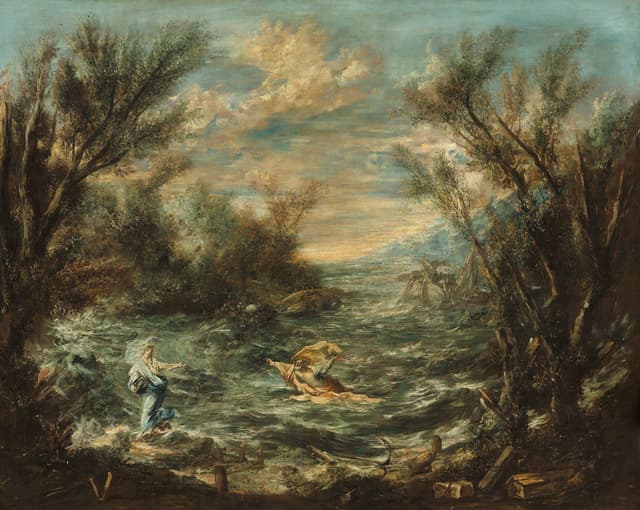
In "Christ at the sea of Galilee" Alessandro Magnasco painted a scene from the episode where Christ's disciples are on a boat caught in a terrible storm. Jesus walked to them on the water to reassure them and invited Peter to join him.

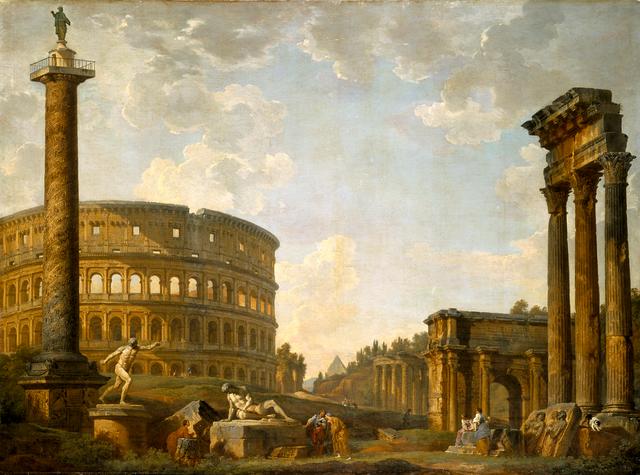
Giovanni Paolo Panini’s "Architectural Capriccio With a Preacher in Roman Ruins" stages an imaginary sermon inside a grand, invented city of antiquity. Towering Corinthian columns, broken archways, and fragments of entablature frame the scene like a stone theater.
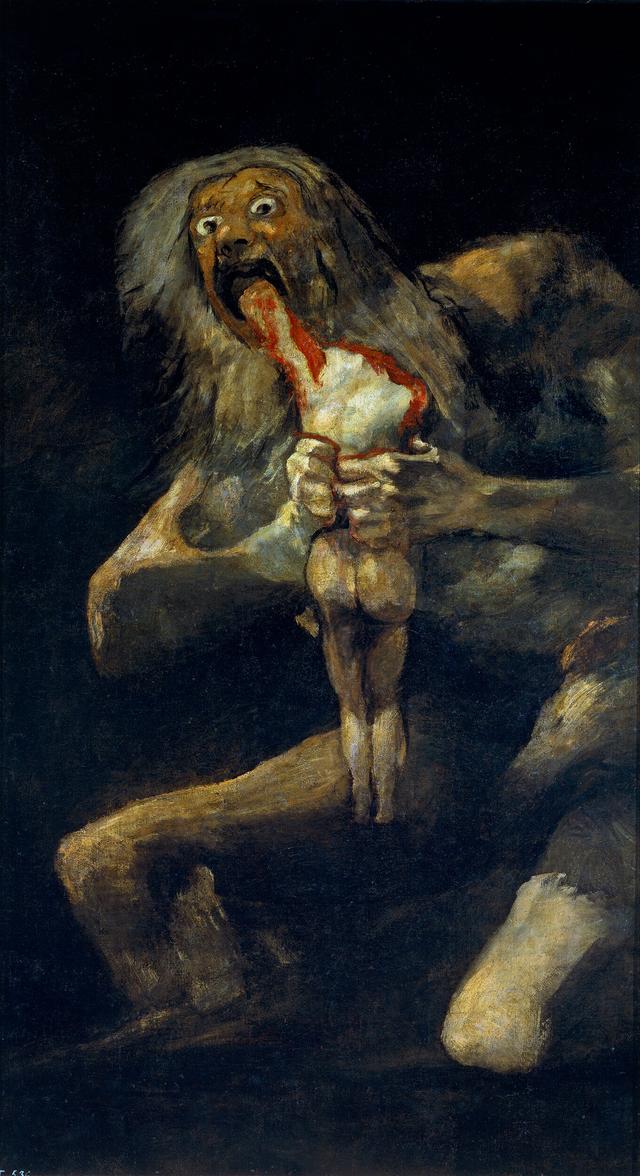
Goya’s "Saturn Devouring His Son" shows the crazed god in a dark void violently eating his child, turning a classical myth into a raw vision of fear, madness, and the darkest side of human nature.
“The Naked Maja” by Francisco Goya was a very controversial painting at the time, showcasing the artist’s bold exploration of sensuality and of the female form. One reason the painting was so controversial is that it was an unapologetic portrait of a nude woman, without hiding behind the false pretense of mythology or religion.
Goya’s "Yard with Madmen" shows a bleak asylum courtyard where distressed, half-naked patients move in chaos under harsh light, exposing both the torment of mental illness and the cruelty of how society confines it.